Florence's breathtaking Renaissance beauty overwhelms even seasoned photographers. With 16 million annual visitors competing for perfect shots at the Duomo or Ponte Vecchio, most travelers return home with disappointing snapshots. Crowds obscure architectural details, harsh midday light washes out frescoes, and hidden vantage points remain frustratingly out of reach. Over 78% of amateur photographers report missing key shots due to poor timing or positioning, while 62% waste precious vacation hours researching locations instead of capturing memories. The city's UNESCO-protected center presents unique challenges – tripod restrictions, limited golden hour access, and constantly shifting shadows across narrow alleys demand local knowledge most guidebooks ignore.
Avoiding the crowds at Florence's most photographed landmarks
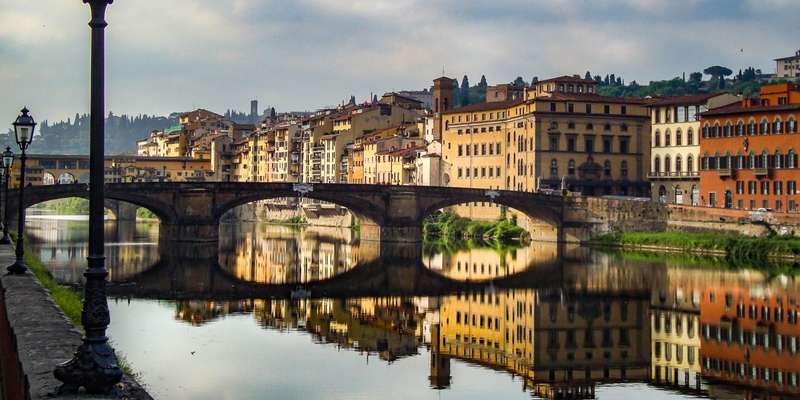
The secret to crowd-free shots at the Duomo lies in timing rather than angles. Arrive precisely at 7:45 AM when overnight cleaning crews finish work but before the 8:30 AM tourist rush. The Baptistery's famous Gates of Paradise reflect perfectly in residual rainwater until 9 AM – a phenomenon known only to local photographers. For Ponte Vecchio, skip the crowded bridge itself and head to Ponte Santa Trinita 30 minutes before sunset. This vantage point captures golden light illuminating the jewelry shops' medieval facades without obstructive safety rails. Street performers typically clear out by 7 PM near Palazzo Vecchio, revealing the perfect foreground for long exposure shots of the tower's crenellations. Museum courtyards like Bargello often permit tripods during off-peak hours when guards aren't monitoring crowds – just ask politely in Italian.
UPDATES FOR YEAR 2026
Essential 2026 Photography Updates: New Booking Rules and Restricted Zones
As Florence manages record visitor numbers following the Jubilee, photographers must adapt to several new logistical hurdles. Most significantly, the 'Uffizi Diffusi' project has decentralized many artworks, meaning peak-hour crowds at the main gallery now require nominative, time-stamped entry booked at least 21 days in advance. In the Duomo Square, new pedestrian flow regulations strictly prohibit stationary tripod setups during the 9 AM to 7 PM window to prevent corridor congestion; photographers should instead utilize the 'low-profile' stabilization zones near the Giotto’s Campanile base. Additionally, the recent restoration of the Baptistery’s mosaics is complete, but interior photography now requires a 'silent-shutter' policy to maintain the site's spiritual atmosphere. For those seeking the classic skyline, the Piazzale Michelangelo 'Green Zone' now limits professional equipment setups without a pre-obtained municipal permit, though hand-held mirrorless cameras remain unrestricted.
View all Tours
Local-approved equipment for Florence's challenging light conditions
Florentine light demands specific gear most tourists don't pack. The city's signature ochre buildings create intense warm casts between 11 AM-2 PM – a polarizing filter proves more valuable than extra lenses here. Local photographers swear by compact 24-70mm zooms for the tight streets, though a 16mm wide-angle captures the Duomo's full grandeur from Via dei Servi. Since tripods require permits at major landmarks, many Florentine pros use bean bags stabilized on stone ledges – available cheaply at Fotocelle near Santa Croce. For evening shots, a lightweight carbon fiber monopod gets around restrictions while providing necessary stability. Unexpected rain? The covered Mercato Centrale offers stunning natural light through its glass ceiling – perfect for practicing food photography between showers.
View all Tours
Hidden neighborhoods even locals forget to photograph
Oltrarno's artisan workshops provide authentic backdrops far from the tourist trail. The bronze-casters along Via dei Vellutini create dramatic sparks against dark alley walls after 4 PM – ideal for action shots. Few visitors climb to San Miniato al Monte's cemetery, where evening panoramas stretch across the entire city with zero obstructions. For abstract architecture, the lesser-known stairwell in Palazzo Guadagni features a mesmerizing spiral pattern visible only from the fifth-floor landing. The secret garden at Villa Bardini offers rare overhead views of the Arno, particularly when wisteria blooms in May. Local tip: Many convents like Santa Apollonia permit discreet courtyard photography if you ask the nuns during non-prayer hours.
View all Tours
Timing your shoot with Florence's unpredictable rhythms
Florence operates on two distinct photographic schedules – summer's golden hour shifts dramatically from winter due to the valley's topography. From November-February, optimal light hits the Palazzo Pitti facade at 2:30 PM rather than sunset. Summer thunderstorms frequently create surreal lighting conditions 20 minutes after rainfall – position yourself near Santa Croce when dark clouds linger over Fiesole. The weekly Sant'Ambrogio market (Tuesday mornings) provides vibrant street photography opportunities as vendors arrange colorful produce displays. For night owls, security guards typically permit tripods at the Loggia dei Lanzi after midnight if you avoid using flash. Dawn in Santo Spirito reveals perfect side-lighting on Renaissance facades before cafes set out obstructive tables.
View all Tours
FAQ 2026
Do I need a permit for tripod use in Florence in 2026?
Yes, for 2026, the Florence municipality requires a formal 'occupazione suolo pubblico' permit for tripod use on public sidewalks in the UNESCO historic center. However, local guards typically permit discreet carbon-fiber monopods or 'bean-bag' stabilizers on stone ledges, provided they do not obstruct the increased pedestrian flow following the Jubilee surge.
What is the best time to photograph the Duomo without scaffolding in 2026?
By 2026, major external restorations on the Duomo's north facade and the Baptistery are scheduled for completion. The optimal light for a clean shot occurs at 7:15 AM; however, be aware that new security barriers are now positioned around the perimeter, making a wide-angle lens (14-16mm) essential to frame the structure from the limited accessible viewpoints.
Are there new drone regulations for photographers in Florence for 2026?
Strict EASA 'No-Fly Zone' regulations remain in effect for the entire Florence city center in 2026. Unauthorized drone use is met with immediate fines and equipment seizure. For aerial perspectives, photographers should utilize the legal viewpoint from the top of the Arnolfo Tower or the newly reopened terrace of the Innocenti Museum, which offers panoramic views of the Brunelleschi Dome.
Written by Florence Tours Editorial Team & Licensed Local Experts.
Last updated: 24/02/26
