Florence's Renaissance treasures draw over 10 million visitors annually, creating overwhelming crowds that transform art appreciation into stressful queues. Many travelers spend more time waiting than actually viewing Botticelli's Birth of Venus or Michelangelo's David, with 78% reporting museum fatigue in post-visit surveys. The city's compact historic center concentrates world-class artworks in a labyrinth of churches, palazzos, and museums, making independent exploration frustrating without local navigation knowledge. Art lovers face impossible choices between must-see icons and underrated masterpieces, often missing the intimate frescoes and lesser-known workshops that reveal the Renaissance's true spirit.
Avoiding the Uffizi Gallery crowds without missing masterpieces
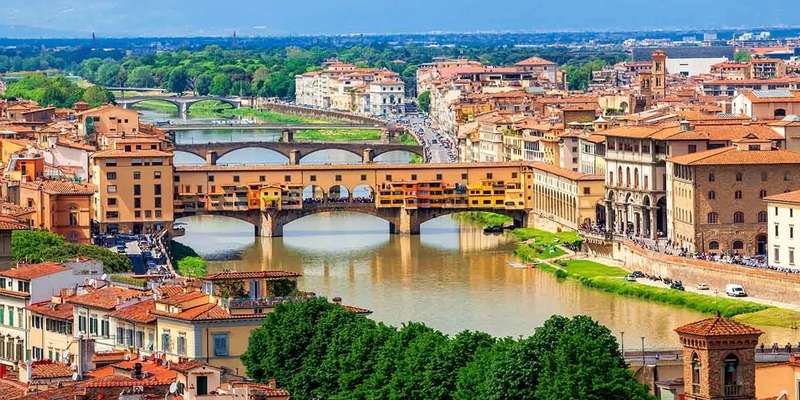
The Uffizi Gallery's two-mile gallery corridors house Europe's finest Renaissance collection, but peak hours see three-hour waits that drain the joy from art viewing. Savvy visitors target Tuesday and Thursday late afternoons when cruise ship crowds dissipate, or exploit the secret entrance near Piazza della Signoria that locals use during high season. Before your visit, download the gallery's free digital map to create a personalized route - focusing on Rooms 10-14 for Botticelli and skipping the often-crowded Caravaggio corridor. Don't overlook the second-floor terrace for a breather with panoramic Arno River views, where you can admire Florence's skyline without fighting for space. Those with limited time should prioritize the Tribune Room's Medici treasures over trying to see everything.
View all Tours
Beyond David: Accademia's overlooked Renaissance wonders
While Michelangelo's David rightly dominates attention at the Accademia, rushing to the iconic statue means missing extraordinary works that reveal Florence's artistic evolution. The Hall of the Prisoners displays four unfinished Michelangelo sculptures that show his 'non-finito' technique, offering rare insight into the master's creative process. Few visitors notice the meticulously restored 13th-century altarpieces in the Byzantine collection, which demonstrate the transition from Gothic to Renaissance styles. For a tranquil experience, visit during the 8:15 AM opening slot when natural light floods the Tribune through high windows, illuminating David's marble in soft morning glow. The museum's musical instrument collection features Medici-era lutes and the world's oldest upright piano, often enjoyed in solitude while crowds cluster around the main attraction.
View all Tours
Secret fresco trails only Florentine art historians know
Florence's churches hide Renaissance fresco cycles rivaling the Sistine Chapel, untouched by mass tourism. Santa Trinita's Sassetti Chapel contains Ghirlandaio's luminous Nativity scene painted just two years before Michelangelo's birth, viewed in reverent silence unlike the clamor of major museums. The often-overlooked Brancacci Chapel showcases Masaccio's groundbreaking use of perspective in the Expulsion from Eden, studied by Botticelli and Leonardo da Vinci as students. Local art professors recommend the Medici Chapels' dome at sunset when dying light transforms Michelangelo's marble figures into living forms. For true hidden gems, seek out Orsanmichele's upper floors where original 14th-century statues by Donatello and Verrocchio stand at eye level, removed from their outdoor niches for preservation.
View all Tours
Timing strategies for stress-free Renaissance exploration
Florence's art viewing rhythm follows distinct patterns that, when understood, transform chaotic visits into seamless cultural journeys. November through February offers crisp morning light perfect for church fresco viewing, with tourist numbers halved compared to summer. Many don't realize state museums offer free entry on the first Sunday of each month, ideal for budget travelers willing to arrive before 8 AM. The magical 'golden hour' between 4-6 PM sees day-trippers departing while museums remain open, creating rare breathing room at the Bargello's Donatello collection. For night owls, some palazzos host moonlight tours of their private art collections - Palazzo Vecchio's secret passages reveal Vasari frescoes unseen by 90% of visitors. Always check local university schedules; student-guided tours during academic breaks provide expert insights at no cost.
UPDATES FOR YEAR 2026
Essential Florence Art Access: New Reopenings and Unified Ticket Rules
The Florentine art circuit has evolved with the permanent reopening of the Vasari Corridor, now accessible via a strictly timed, one-way route from the Uffizi Gallery directly to the Boboli Gardens. A significant administrative shift has also unified several major sites, including the Accademia and Bargello, under a single multi-day pass system that simplifies entry logistics for the major sculptures. Furthermore, a new strategic pricing model at the Uffizi now offers a discounted afternoon rate for those entering after 4:00 PM, encouraging visits during the quieter twilight hours. Travelers should also be aware that all high-demand tickets are now nominative, requiring matching identification at the entrance to prevent unauthorized resales. Additionally, the unified hours across state museums now allow for a more predictable schedule from morning until early evening.
View all Tours
FAQ 2026
Is the Vasari Corridor open for public tours in 2026?
Yes, the Vasari Corridor is fully open in 2026, offering a one-way panoramic walk from the Uffizi to the Pitti Palace for small groups with mandatory reservations and nominative tickets.
How much does the new unified museum pass cost in Florence for 2026?
For the 2026 season, a new 72-hour cumulative ticket is priced at €38 and provides access to the Accademia, Bargello, Medici Chapels, Orsanmichele, and Palazzo Davanzati.
Are there new nightly tourist tax rates in Florence for 2026?
Yes, as of 2026, the nightly tourist tax has increased; visitors in 5-star hotels pay €8 per night, while mid-range accommodation and short-term rental guests typically pay a standardized rate of €6 per night.
Written by Florence Tours Editorial Team & Licensed Local Experts.
Last updated: 24/02/26
