How to navigate Florence's historic center on foot

Florence historic center walking guide – save time with hidden shortcuts from locals
Navigating Florence's historic center on foot can quickly turn from dreamy to daunting. Over 16 million annual visitors crowd into this UNESCO-listed area barely 2 square miles large, where 83% of attractions sit within walking distance yet 62% of travelers report wayfinding difficulties. The maze of medieval streets wasn't designed for modern tourism - sudden dead-ends spill into packed piazzas, crucial signage hides behind Renaissance facades, and what looks like a shortcut on maps often leads to restricted pedestrian zones with steep fines. First-time visitors waste an average 47 minutes daily retracing steps or circling blocked routes, missing timed reservations at the Uffizi or Duomo climbs. When every wrong turn risks squandering precious vacation moments in this open-air museum, understanding the logic behind Florence's walkability becomes as essential as your museum pass.
Full Width Image

Decoding Florence's pedestrian zones – where you can and can't walk

Florence's ZTL (Zona a Traffico Limitat) system turns casual strolling into a potential minefield if you don't understand the rules. The historic center's 5 overlapping restricted zones activate at varying hours, with cameras snapping license plates of unauthorized vehicles - including many taxis. As a pedestrian, you'll share space with delivery scooters and resident cars during morning windows, then navigate human tides when restrictions fully engage after 10am. Key through-routes like Via de' Calzaiuoli remain accessible, but 'no entry' arches near Palazzo Vecchio or Santa Croce often confuse walkers. Locals know the 3pm shift change brings temporary openings near Mercato Centrale, while savvy travelers use church bell towers as visual navigation aids above the restricted zone signs. Remember that smartphone maps frequently suggest illegal auto routes; instead, follow the embedded bronze compass roses in pavement near the Duomo for orientation.
UPDATES FOR YEAR 2026

New Pedestrian Protocols and Historic Center Restrictions

Travelers navigating the historic core must now account for strict 'decorum' laws which carry fines up to €500 for eating street food or gelato while stationary on sidewalks in high-traffic zones like Via de' Neri and the Uffizi during peak lunch and dinner windows. To reclaim sidewalk space for walkers, rental e-scooter sharing has been removed from the city center entirely. Furthermore, the walking experience on 50 major streets, including the Ponte Vecchio and Via Roma, has been transformed by a total ban on permanent outdoor dining structures, restoring the original medieval widths of these passages. While this makes movement significantly easier, it requires advance planning for sit-down meals as sidewalk seating has been drastically reduced to improve pedestrian flow.

View all Tours

Time-saving walking routes the crowds miss

The secret to efficient Florence walking lies in using 'backstage' routes locals have relied on for centuries. Instead of joining the bottleneck on Ponte Vecchio, cross the river via Ponte Santa Trinita and double back along Via de' Bardi for breathtaking views without jostling. A clever diagonal path from Palazzo Pitti to the Duomo follows Via dello Sprone - a quiet alley that bypasses three major tourist chokepoints. Morning visitors to the Accademia can escape post-David crowds by taking Via Ricasoli's northern stretch to San Marco, where a network of artisan workshops leads pleasantly toward Mercato Centrale. These pathways aren't just shortcuts but immersive experiences; you'll pass 15th-century tabernacles marking ancient parish boundaries and family-run bottegas where Florentines still shop. For sunset walks, the elevated route from Piazzale Michelangelo through San Niccolò's olive groves delivers panoramic descent without the uphill struggle most tourists endure.

View all Tours

Essential walking gear for Florence's unique challenges

Florence's cobblestones and climate demand footwear choices most travelers overlook. The 14th-century pietra forte paving stones become slick as ice after summer rainstorms, while museum dress codes prohibit certain shoe types. Local cobblers recommend cushioned rubber soles with deep treads - not the hard leather bottoms many assume look 'Italian'. From May through September, carry foldable silicone shoe covers for sudden downpours that flood low-lying areas near the Arno. A compact umbrella serves dual purpose against both rain and relentless sun on exposed piazzas. Smart walkers stash a reusable water bottle to refill at Florence's 40+ historic fountains (look for 'acqua potabile' signs), avoiding both dehydration and the 3€ tourist trap waters. The most overlooked item? A thin scarf or shawl - essential for covering shoulders at religious sites, padding stone church pews during rest breaks, and creating instant shade during midday walks.

View all Tours

Free navigation tools better than your smartphone
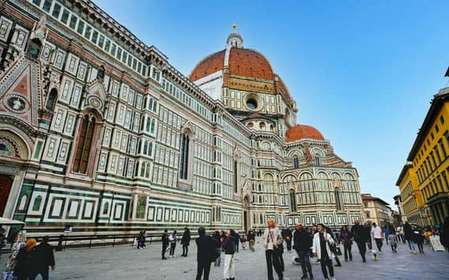
While digital maps struggle with Florence's verticality and medieval irregularities, the city provides brilliant analog solutions. At every major intersection, discreet ceramic plaques display the names of adjacent streets in black on white - often placed at eye level where modern signage gets lost. The Civic Museum network offers free paper maps with layered historical context unavailable on apps, highlighting gradient changes that affect walking ease. For real-time orientation, train your eye to spot the Duomo's lantern from vantage points - its position remains visible when GPS fails in narrow alleys. Local bookshops sell 'Firenze Passo Passo' foldouts that overlay current streets with Renaissance-era maps, revealing logical connections lost to modern cartography. Evening walkers should note that Florence's street lighting follows ancient oil lamp routes, creating naturally illuminated paths between major monuments while leaving less important alleys darker for safety.

View all Tours

FAQ 2026
Is it illegal to eat street food while walking in Florence in 2026?
While you can walk with food, it is strictly forbidden to stop and eat on the sidewalks, doorsteps, or roadways of specific historic streets—including Via de' Neri, Piazzale degli Uffizi, and Piazza del Grano—during peak hours (12pm–3pm and 6pm–10pm). Fines for violating these decorum rules range from €150 to €500.
Can I use rental e-scooters to get around the Florence historic center in 2026?
No, as of April 2026, rental e-scooter sharing services have been banned from Florence's streets and sidewalks to improve safety and reduce pedestrian obstacles. Visitors should instead utilize the expanded tram network, which now includes the VACS extension serving Piazza San Marco, or rely on the city's highly walkable historic grid.
Are there new size limits for walking tours in Florence for 2026?
Yes, walking tour groups are strictly capped at a maximum of 25 participants. Additionally, the use of megaphones and amplifiers by tour guides is prohibited city-wide. These measures are designed to reduce noise pollution and prevent large bottlenecks in narrow medieval corridors.

Written by Florence Tours Editorial Team & Licensed Local Experts.

Last updated: 24/02/26