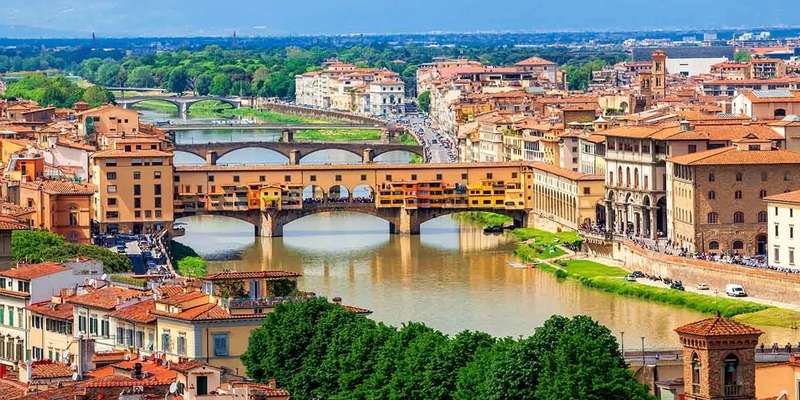
Choosing when to visit Florence can make or break your Italian dream. Over 16 million tourists flood the Renaissance city annually, with summer queues at the Duomo stretching 3 hours and hotel prices doubling. Many travelers unknowingly arrive during scorching July heatwaves or November downpours, missing the golden window when Florence shines. Locals know the secret rhythms – when wisteria blooms frame Ponte Vecchio, when truffle festivals ignite the Oltrarno, and when you can have Michelangelo's David nearly to yourself. Timing affects everything from your photos to your pace, with seasonal closures disrupting itineraries. We'll help you match your priorities to Florence's calendar so you experience la dolce vita at its sweetest.
Why summer crowds ruin Florence's magic (and how to adapt)
June through August transforms Florence into a pressure cooker of tourism, with temperatures hitting 95°F (35°C) alongside cruise ship hordes. The Uffizi becomes a shuffling human chain, while terrace restaurants require military-style reservation planning. Yet this remains peak season for a reason – all attractions operate at full capacity with extended hours. Savvy visitors leverage early August when Italians flee for ferragosto, creating brief respites. If you must visit in summer, adopt Florentine rhythms: sightsee at dawn, siesta midday in your airbnb, then join the passeggiata when marble buildings glow at sunset. Purchase skip-the-line tickets for major museums before they sell out by noon.
UPDATES FOR YEAR 2026
Essential Logistics: New Seating Protocols and Enhanced Museum Access
Navigating the historic heart now involves more structured urban planning designed to protect the city's heritage. New protocols have significantly reduced the density of outdoor dining tables in major squares like Piazza della Signoria, Piazza della Repubblica, and Piazza Pitti to improve pedestrian flow, making advance terrace reservations more critical than ever. Additionally, international arrivals must now factor in the fully operational biometric Entry/Exit System (EES) at major Italian airports, which has streamlined border crossings but requires initial registration. For art enthusiasts, a newly integrated ticketing system has debuted, offering a consolidated pass that bridges the Accademia and the Bargello museums, allowing for a more seamless experience across the city’s premier Renaissance collections.
View all Tours
Spring's sweet spot: April-May secrets from Oltrarno residents
Locals whisper that mid-April to late May offers Florence's perfect equilibrium – mild 68°F (20°C) days, wisteria cascading over stone walls, and manageable crowds before school holidays. This is when Florentines reclaim their city, hosting the Scoppio del Carro Easter explosion spectacle and opening hidden garden cloisters. The secret? Stay west of the Arno where artisan workshops thrive sans queues. Morning light at Boboli Gardens turns boxwood labyrinths emerald, while evening aperitivi on Santo Spirito's steps cost half the price of Piazza della Signoria. Pack layers for unpredictable showers that keep masses away from the outdoor David replica at Palazzo Vecchio.
View all Tours
Fall's golden bargain: September truffles & October serenity
September delivers Florence like a Renaissance painting – golden light on terracotta roofs, grape harvest festivals in Chianti villages, and temperatures ideal for climbing Brunelleschi's dome. By October, summer's frenzy fades but museums remain fully open. Hotel rates drop 30% as days stay pleasantly crisp (55-70°F/13-21°C). Don't miss the Rificolona paper lantern parade or San Miniato's chestnut festival. This is prime time for foodies – white truffles appear in Mercato Centrale, while new olive oil gets drizzled over ribollita soup. Locals recommend late September for swimming at hidden river beaches before they close.
View all Tours
Winter's untold charms: Christmas markets to crowd-free masterpieces
November through February reveals a contemplative Florence few tourists see. While some countryside wineries close, the city's core stays vibrant with Christmas light arches on Via Tornabuoni and Epiphany parades. January offers surreal access to Botticelli's Birth of Venus with maybe five viewers in the room. Icy mornings give way to sunny 50°F (10°C) afternoons perfect for leather market bargaining. Pack thermal layers for unheated palazzos, but relish hotel rates at yearly lows. Insider tip: Visit during Carnevale in February for bomboloni cream puffs and velvet-clad historic processions most guidebooks miss.
View all Tours
FAQ 2026
What are the new rules for outdoor dining in Florence for 2026?
Starting this season, Florence has implemented strict limits on the number of outdoor tables in UNESCO heritage zones like Piazza della Signoria and Piazza Pitti. This change aims to improve pedestrian accessibility, meaning terrace seating at popular restaurants now requires booking several days in advance.
Is there a new combined museum pass for Florence in 2026?
Yes, a new integrated museum system launched in March of this year offers a combined 48-hour or 72-hour ticket for the Galleria dell'Accademia and the Bargello Museums. This pass simplifies the reservation process and provides a more cost-effective way to visit multiple state-run galleries.
What are the 2026 tourist tax rates for staying in Florence?
The nightly tourist tax (tassa di soggiorno) is currently structured by accommodation rating: €8 per person for 5-star hotels, €7 for 4-star, and €6 for 3-star or short-term rentals. These fees are mandatory for the first seven nights and are typically collected in cash or by card directly at the property upon checkout.
Written by Florence Tours Editorial Team & Licensed Local Experts.
Last updated: 24/02/26
